
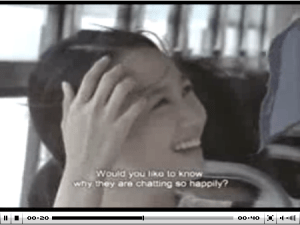
Morality from the Thai Health Promotion Foundation
So, what creative solutions could be applied to these problems?
The group that originally discussed this issue back in 2008, came up with several suggestions. Research indicates the basis for good mental health often starts when we’re very young. I vividly remember the day we brought our beautiful firstborn back home from the hospital. We laid her down, we looked at each other and both said in unison, “So now what do we do?”

Supernanny
Wouldn’t it be great if parents received some training about how to encourage healthy mental development of their children? Some TV shows have explored this area, such as ‘Driving Mum and Dad Mad’, and ‘Supernanny’.
And why stop at parents? How about some peer support training for extended families and social groups?
Then, once children reach school, wouldn’t it be great if they received training in basic life skills and resilience in handling stressful or difficult situations in later life, such as relationships, emotions, work, money, how to deal with set-backs?

Alcohol is a curse. For the record, if you want to curse me with a bottle of vodka, that's ok...
All this could be underpinned with some more investment in research about underlying root causes of mental illness.
It would also be great to see multi-tiered intervention for people before and after crisis care, along with greater education about the services available, so people are encouraged to seek help earlier. This could include more support for advocacy groups (WAAMH, ARAFMI, MIFWA, and MHPA), better leadership in the political arena, and involvement of some high profile advocates to break down the stigma associated with mental illness.
The other really big solution would be to join the dots between the various government agencies to combine social welfare and housing efforts with health. This would help reduce some unnecessary stresses that make life so much more miserable than it has to be, for people who are already vulnerable. Unfortunately, this is not a new suggestion and I have absolutely no idea how to do it.
Another embryonic idea at the forum was about providing incentives for health professionals to keep people healthy. Imagine if a GP received payment each year based on the number of patients who didn’t require any treatment at all, for anything.
What do you think?

 Jonathan Smith - turning strategy into reality
Pingback: Mental health part three – “help is the sunny side of control” | Jonathan Smith
Pingback: Mental health part one – Open Space | Jonathan Smith
Pingback: Mental health part two – supply and demand | Jonathan Smith